The 2025 Regional Economic Framework qualifies as the Twin Cities region’s Comprehensive Economic Development Strategy (CEDS) Alternative.
Background
A CEDS Alternative is a regionally driven, place-based planning process that supports effective economic development across America’s communities. To be eligible for U.S. Economic Development Administration (EDA) funding, regional organizations must have an up-to-date CEDS (or CEDS Alternative) in place.
This CEDS Alternative offers a snapshot of the vibrant and evolving economic development ecosystem in the Twin Cities region. Hundreds of public, private, and nonprofit organizations actively contribute to key aspects of regional economic vitality. Their ongoing efforts and collaborations form the foundation of what is captured in this CEDS Alternative.
The
2020 Regional Economic Framework, the region's last CEDS Alternative was prepared and adopted in 2020 through a collaboration between the Metropolitan Council, GreaterMSP, and the Center for Economic
Inclusion. The EDA requires CEDS (or CEDS Alternative) plans to be updated every five years.
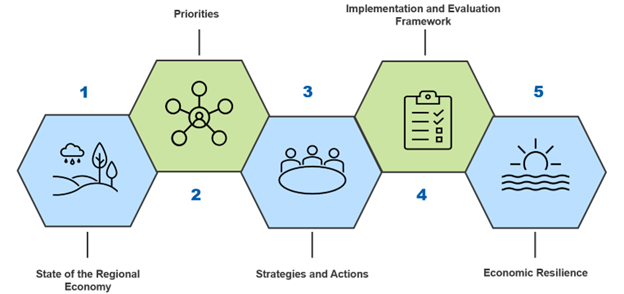
A CEDS Alternative document must include specific sections:
- An overview of the region’s economic development landscape and conditions
- A comprehensive assessment of the region’s strengths, weaknesses, opportunities, and threats (a regional SWOT analysis)
- Economic priorities and strategies to advance the regional economy
- An action and implementation framework that identifies roles and metrics to measure progress
- An economic resilience plan for responding to potential economic disruptions
The 2020 Regional Economic Framework outlined nine key economic priorities for the region, each supported by specific strategies and actions aimed at pursuing opportunities and driving progress. These priorities now serve as a foundation for the 2025 Regional Economic Framework update, guiding discussions on how the region’s economic landscape has evolved in recent years and how that evolution should inform refreshed strategies and action plans.
Nine Strategic Priorities